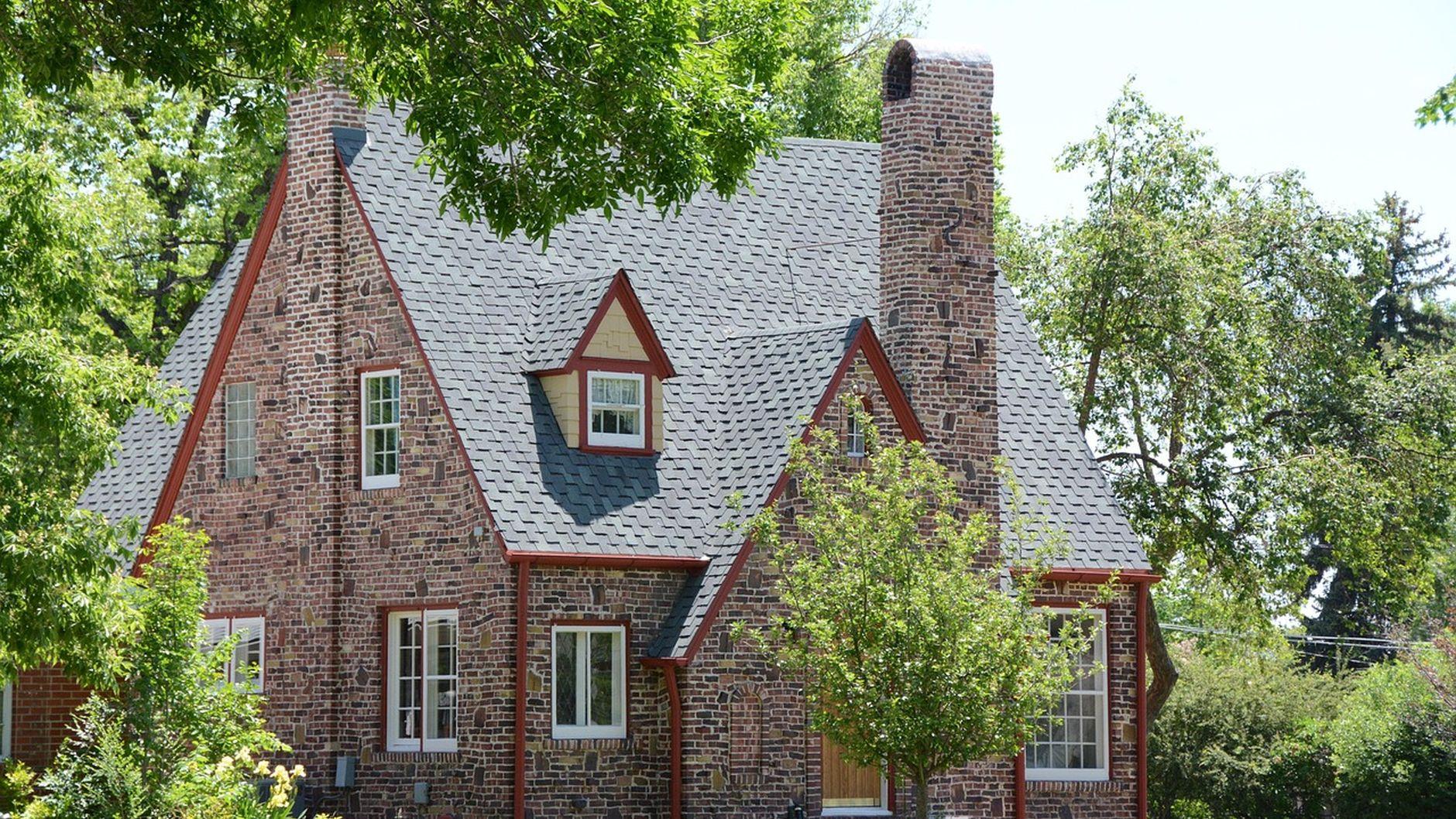
On an apartment building, a brick chimney is rarely just one household's problem. It often climbs past two or three floors, holds a flue for each unit stacked below it, and stands over a walkway, a parking area or the path residents use to reach their doors. When a strong quake shakes it loose, the brick that falls lands where people walk. That is why owners of older buildings in Whittier ask us about bracing, and why we treat it as a building job rather than a fireplace job.
Why the tall stacks are the ones that worry us
Whittier lent its name to the October 1987 earthquake, and brick chimneys were among the damage seen across the area. The 1994 quake shook the county again. The pattern after both was familiar: the part of a chimney above the roof, with nothing around it to hold it, cracked at the roofline and either leaned or came down.
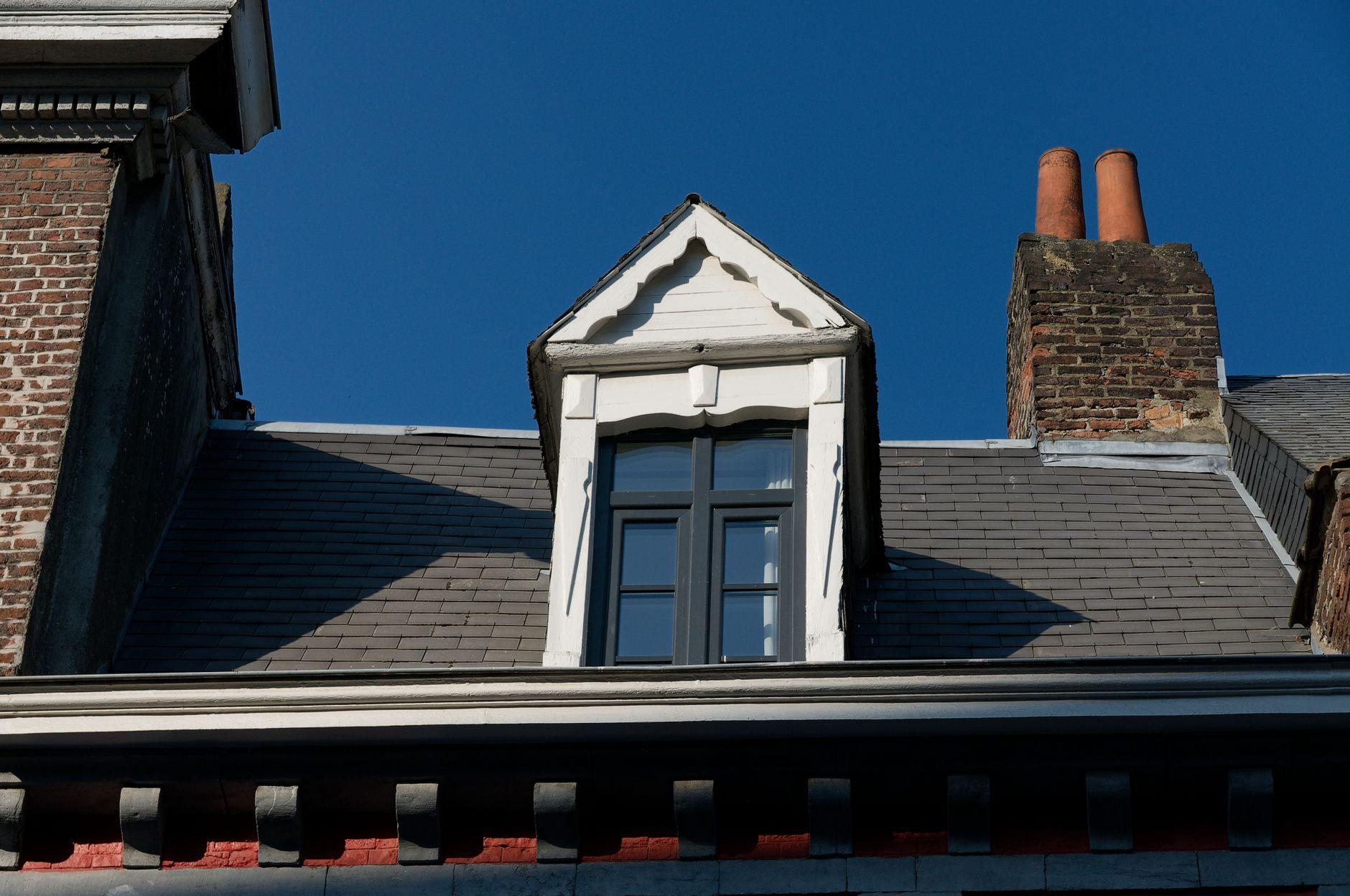
An apartment stack is often taller than a house chimney, because it has to clear a higher roof and carry several flues. More height above the roof means more force on the joint at the roofline when the ground moves. Old mortar that has turned sandy, or a crown that has let water into the top courses for years, weakens that joint further.
The general options
Every chimney is different, so these are the broad kinds of work rather than a fixed menu:
- Bracing to the roof structure. Steel members tie the upper part of the stack back to the roof framing, so the brick above the roof has support beyond its own mortar.
- Straps at the floor and ceiling lines. Where the chimney runs up the outside wall, steel bands around it are anchored into the building framing at each level, holding the chimney against the wall rather than letting it swing free.
- Taking the top down. On a stack that is too weak to brace, the brick above the roofline can be removed and replaced with a lighter top, or rebuilt with reinforcing in the new brick.
- Combinations. Many tall stacks get some of each: the top lowered or rebuilt, and the part that remains tied to the building.
We do not promise any of these makes a chimney quake proof, and we do not quote code sections or rebates. We tell you what the stack is like now, what each option would change and what it costs.
Why a scan comes first
Bracing a stack only helps if the brick and the flues inside it are worth holding. Before we price structural work on a building chimney, we want to see inside every flue it carries. That is a Level 2 inspection at $400 per flue. A stack with three flues means three scans, and together they give a full picture of the inside.
The scan shows cracked or shifted tiles, gaps between flues, and mortar that has washed out from inside. Those findings decide whether the stack can be braced as it stands, whether it needs repair first, or whether the top should come down.
What decides the price of the structural work
Bracing and rebuilds have no published figure on our list, because two stacks on similar buildings can be very different jobs. The written scope we hand you is built on:
- the height of the stack above the roof and the number of flues it holds;
- the state of the brick and mortar at and above the roofline;
- what the roof framing is like where braces would land;
- whether the stack runs up an outside wall where straps can be fitted;
- how residents' walkways and parking have to be protected while we work;
- whether the units the flues serve will keep burning wood, switch to gas, or stop using the fireplace.
That last point matters more than owners expect. If a unit's fireplace is no longer going to be used, its flue can sometimes be capped off and the stack lowered further, which changes the job.
Send the address and how many flues the stack holds, and we set up the scans first, then return a written scope for the structure.
Working on an occupied building
We plan the work around residents. Before anything starts, the owner or manager tells tenants which days the roof will be busy and which fireplaces must stay unlit until the job is done. We fence off the ground below the stack while brick is coming down, and we cover each firebox opening in the units that share the stack so dust stays out of living rooms.
Each unit's page in the final record shows what was done to its flue, with photos before and after, so a future buyer or insurer of that unit can see the history.
Smaller items found on the same visit
A structural visit often turns up lighter work at the top of the stack. A cricket to stop water building up behind a wide stack is $460 to $1,035, or $690 to $1,700 with new flashing done at the same time. Caps are quoted on site, since size and type set the price. These go on the schedule as separate lines so you can approve them one at a time.
Further reading
- Our seismic retrofit service page describes the work for a single home.
- Level 1 or 2 for a whole building explains when every flue needs the camera.
- Up to code chimney repairs lists the fixes that follow a failed scan.
If a stack on your building in Whittier, La Habra, La Mirada or La Puente has you uneasy, start on the contact page: tell us the building and the flue count, and the scans go on the calendar first.
Every Unit, One Visit, One Sheet Each
Bagley Chimney Care works from Whittier for owners of duplexes, apartment blocks, condo rows and large houses. Send the count of fireplaces and the crew inspects each one, files its findings under the unit number and scopes repairs in writing.